
ReBoot Rewind

Over thirty years ago, ReBoot started airing as one of the first 3D-rendered television series. To celebrate the 30th anniversary of the original season, an 8-part documentary was independently released in September of 2024, named ReBoot Rewind.

During filming of the documentary, the crew found that the original studio still had the original master tapes of the episodes, but they were stored on a medium that is no longer easily viewed. The masters are on large magnetic tapes, but encoded digitally to retain full resolution of the original renders and composites.

Unfortunately, because the technology to view the tapes is no longer easily accessible (the few remaining legacy decks to read the tapes are prohibitively expensive and have a limited number of read-hours before needing maintenance), all existing copies of ReBoot are actually just lower resolution versions of the masters, which were used for airing on TV in the 1990s. Which means that the resolution is 480 vertical interlaced scan lines, a very low resolution. That includes the official ReBoot DVDs (which I own)!

And there is a separate problem: now that the master tapes are so old, they are disintegrating. Even reading the tape once will destroy it. And the longer the tapes sit around, the more damage they will accrue.

So the documentary crew convinced Mainframe (the production company) to let them try and convert the master tapes to full-digital copies. That’s where Linus Tech Tips, a popular Canadian YouTube technology channel, stepped in and provided some funding to help this project move forward, along with one of their sponsors, KIOXIA, a memory and solid state drives company.

Using the funding, the crew was able to purchase legacy decks to read the master tapes and buy extra parts and labor to get them working. And after a lot of work, the master tapes are actually converted to full digital files!

You can watch the entire Linus Tech Tips video describing the technical problems with the master tapes and the solutions to getting full-resolution digital versions of the episodes:

And if you want to watch full episodes of ReBoot in their original full-resolution glory, head over to the Mainframe YouTube channel, where they are slowly releasing episodes! Note: they are only on season 1, episode 5, so converting the raw digital data from the master tapes to YouTube-ready files seems to be taking lots of time.

But rest assured, the raw data has been extracted and preserved from the deteriorating master tapes, so the original ReBoot renders have been preserved for history!

New Gorillaz Traditionally-Animated Video

Gorillaz, the virtual band created by musician Damon Albarn and comic artist Jamie Hewlett, recently released their ninth album, The Mountain. As part of the release, they also created a beautiful animated video with three of the songs from the album, “The Mountain, the Moon Cave, and the Sad God”.

The final animation is unique because it was produced using a hybrid workflow of traditional (hand-painted) images with digital effects, with the ultimate goal of recreating the feel of Western animated films from over half a century ago. The animation team purposely imposed on themselves some of the same constraints that mid-20th-century animators would have faced, and solved them with the same tricks and techniques. But they also judiciously used modern technology to speed up their workflow, like using Photoshop over hand-painted backgrounds to add fine detail to the background images.

The end result is a superb animation, set to fantastic new music, telling a beautiful visual story. The influence of The Jungle Book is obvious in the first part of the animation, the Moon Cave sequence is an homage to surreal sequences in older animated films, and throughout it all the main characters stay on-model with Jamie Hewlett’s design.

If you want to learn more about the specific techniques and workflow used in the animation, Cartoon Brew wrote a much longer article from interviews with the animators that includes some of the original artwork used in the animation.

James Lee’s New Workflow Without Adobe

James Lee, a popular YouTube animator, posted a new video today about the tools he uses in his new workflow. After using Adobe for over a decade, he finally pulled the trigger and switched completely away from all Adobe products.

If you are not familiar with James Lee’s work, his satirical YouTube videos are from the point of view of Nox, his alter-ego. The clips of Nox speaking to the viewer are highly stylized video footage, intermixed with short 2D animations, motion graphics, 3D animations, and occasional stock footage.

A year or two ago, he released a video titled “Breaking up with Adobe” (caution: nsfw), which ended with Nox crawling back to Adobe while lamenting the unhealthy relationship. A couple months ago, he released “When OneDrive Ruins Your Day” (caution: swearing), which revealed that the video was made without any Adobe tools.

In his newest video, “How I Broke up with Adobe” (caution: more swearing), he goes into a little more detail about his new pipeline.

And as a final reveal, he explains how he switched his operating system from Windows to Mint, a variant of Linux. He acknowledges that there is a learning curve, but I appreciate his explanation of the benefits of switching and his enthusiasm of the technology.

I need to switch to Linux on my secondary computer sometime this year, before Windows 10 support runs out in October. I am also looking forward to experimenting with Linux as a desktop OS, because it has been years since I used it that way (and even then, it was only for software development at work). I still don’t know if I will use Mint, Arch, or some other distribution, but it’s good to hear how well Linux is working for other people.

Pixar in a Box

Pixar has partnered with Khan Academy to provide free education about the animation process to students. The course is named “Pixar in a Box“.

Khan Academy provides free online courseware for students. Unlike Coursera and other so-called “open” education sites, Khan Academy does not charge for any of their courses and does not even use advertising. The website originally started as a series of YouTube videos by founder Salman Khan, who was tutoring his cousin.

Most of the courses are geared towards general education of K-12 and college students, with courses like “6th Grade Math” and  “Chemistry”. More recently, Khan Academy has started partnering with other companies, universities, and museums to provide more niche education. The “Pixar in a Box” course is designed for middle-school and high-school students, but it is available to everyone.

The courses are math-heavy, showing how math is used the animation process. For example, one course explains how trigonometry is used to create the Pixar worlds and another teaches how weighted averages are used to create characters. Pixar’s goal is to show how academics relate to real-world applications that students care about.

Metroid Short Film

Rainfall Films, a production company from Los Angeles, has created a new short film set in the Metroid universe. They did a great job of conjuring the sense of isolation, deep space, and exploration that is the hallmark of the Metroid games. Plus they used many of her iconic weapons and suit features, including the morph ball.

It makes me nostalgic, remembering playing the original Metroid game on the NES.  And, much later, playing through the Metroid Prime trilogy. In fact, this film really captured the feeling of Metroid Prime 3: Corruption, one of my favorite games of all time.

You can read more about the creation of the film at CGSociety, where they interviewed the writer/director, Sam Balcomb.

New Justice League Series?

Warner Bros. Studios Posters

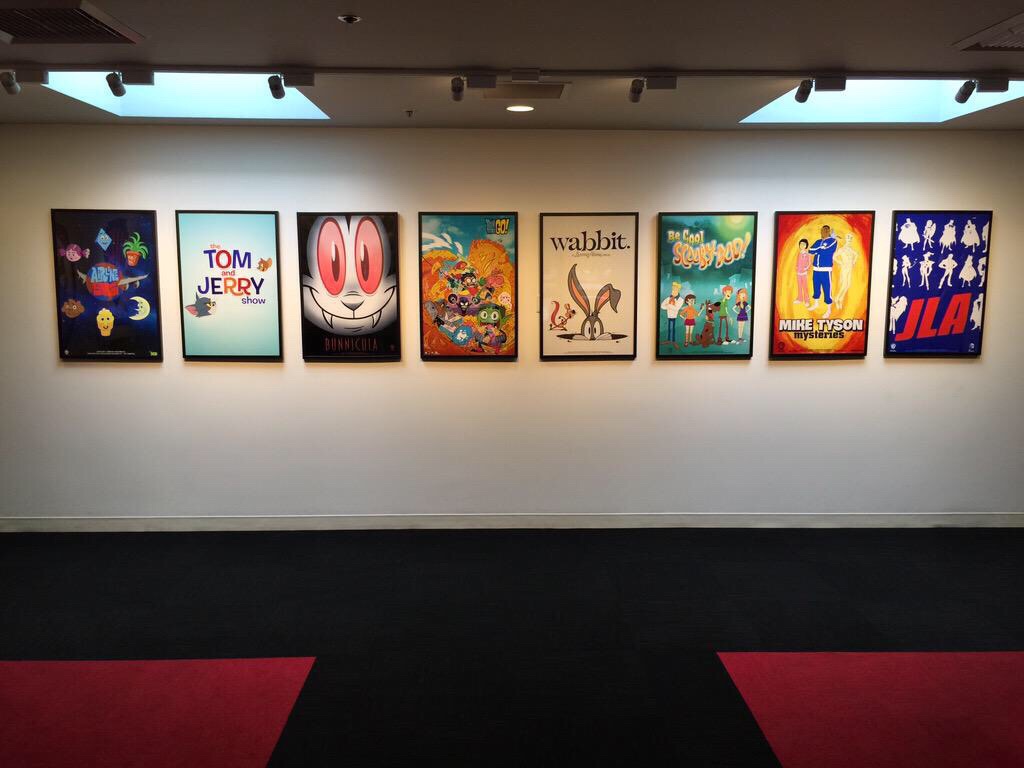
There are some new rumors floating around Reddit about a new Justice League animated series from Warner Bros. The thread on Reddit shows a picture, allegedly taken inside the Warner Bros Burbank studios, that shows a series of framed posters. All of the posters are of current or announced shows except for the last one, which simply has “JLA” and a series of superhero silhouettes.

Not all of the other shows in the poster are from Cartoon Network, so it is possible that any new Justice League series could be on Boomerang or another Warner-owned station. Since Cartoon Network is still keeping quiet about this revelation, everything about the new series is all speculation (including the name and even existence of it). I hope we get to hear more information about a new Justice League series sometime soon!

In a related topic, Bruce Timm has been working with DC Animation to create a new Justice League film, titled Justice League: Gods and Monsters. Unfortunately, the film is set in an alternate reality where Superman is the son of Zod instead of Jor-El, Wonder Woman is married to one of Darkseid’s sons, and Batman is not Bruce Wayne, but Kirk Langstrom (aka “Man-Bat” in the comics). There is one more bizarre surprise about Batman in this reality — he is a vampire.

DC is releasing a three-episode prequel to the movie, named Justice League: Gods and Monsters Chronicles. You can view the first episode online and see for yourself how dark this alternate DC reality is and the tone of the upcoming movie.

New Kaze Productions

I stumbled on some announcements from last year that a new series is being produced in the same world as Kaze: Ghost Warrior, the independent pilot episode created entirely by Timothy Albee using LightWave 3D. The producers are also creating a separate sci-fi series using LightWave, too. However, it looks like they plan on releasing both series as Virtual Reality/Augmented Reality shows (presumably on Oculus Rift headsets). I assume that the episodes will be available in a non VR/AR method, but the press releases are not clear on that point.

Dalton Industries, the producers, seem to be betting pretty hard on VR/AR acceptance. They have also announced virtual toy lines for both series that will be sold to users of VR/AR systems. The prices seem steep to me; how many people will pay $20-$50 for virtual toys that can only be seen in a virtual headset?

As an aside — the creator of Kaze is now credited as Amadhia Albee, after she publicly changed her name and gender identity in 2009. Whatever name she wants to go by, she has some of the best LightWave animation books, which can quickly get anyone ramped up in any aspect of creating a film using the software. So I hope that the Kaze episodes get released to the general public and I can view them without needing a VR/AR headset.

RenderMan Free For Non-Commercial Use

Pixar Animation Studios announced that the next version of RenderMan, their award winning render engine, will be free for non-commercial use. The non-commercial license will provide full functionality without any restrictions, watermarks, or time limits. And the next version is due out sometime soon (fourth quarter of this year, according to their website).

The render engine works with Maya, but currently does not work with LightWave. Some third-party developers are creating plugins for LightWave that will add RenderMan integration. I expect that once the RenderMan non-commercial licenses are available, there will be more developers working to make this happen (the non-commercial license allows for developing commercial tools and plugins).

In their FAQ page for the non-commercial licenses, they explain why they have chosen to give away these licenses. One of the reasons is exciting to see from such a leading studio:

“It is Pixar’s experience that limitations on software access have become an impediment to the development of the production industry, and that universal access and a set of common standards and practices can only stimulate further growth.”

Hopefully this type of open access for educational and personal use becomes more common, which I believe is good both for aspiring artists and the companies selling high-end software packages.

I am going to sign up for advance registration of the license, even if it might be a while before I get a chance to use it.

Postscript:  Here is a good good article on the new features and architecture of RenderMan (including the new RIS framework).

Starburns Industries

Starburns Industries (Logo)I caught a cold late last week, so I spent the weekend sleeping and catching up on television. I finally got around to watching the last few weeks of Rick and Morty, Dan Harmon’s new animated show on Adult Swim. If you have not seen the show, it is a good comedy animated series featuring sci-fi adventures and some dark, witty humor. If you do not know who Dan Harmon is: he created and provided the main creative direction for the NBC show Community. If you have not watched Community, you are missing out on a great comedy series. Now that 30 Rock is finished, it is the only network show I watch.

Anyway, I noticed that the end of Rick and Morty has a closing tag for “Starburns Industries”. For those of you that do not watch  Community (shame on you for not immediately rushing off to watch a season or two!), “Starburns” is a side character in the show, so that name in another Dan Harmon creation immediately grabbed my attention. And that is how I found out about Starburns Industries, an animation studio created by Dan Harmon. Check out their reel, available on the front page of their site. Their About page is interesting, too, especially the bios for co-founders Joseph Russo II (he was an animator on The Simpsons) and Dino Stamatopoulos (from the Chicago area and has some solid comedy writing credits).

They primarily work in 2D animation and stop-motion, and I was surprised that I recognized a fair amount of their work (even though I have not watched much of it — I didn’t see Frankenhole or Beforel Orel, for instance).